Buying Property in Australia as a New Zealander: The Complete 2026 Guide

A practical 2026 guide for Kiwi families buying property in Australia. The lender, KiwiSaver, currency and First Home Guarantee decisions that quietly decide whether you save tens of thousands or lose them.
.jpg)
The Good News
Around 600,000 New Zealanders live in Australia, and more New Zealanders are buying homes here each year. Things back home have been tough, and a lot of us are moving across the Tasman for a fresh start. For many, owning a home is part of that. I moved over in 2012 and have spent the years since helping Kiwi families into the Australian market.
The good news is that buying property here as a New Zealand citizen is, on paper, easier than it is for almost any other foreign nationality. Special Category Visa holders are exempt from FIRB approval, can access most mainstream Australian home loans, and often qualify for the same first-home buyer concessions as Australian citizens.

The bad news is that the process is full of small landmines that quietly cost real money. Lender policies on New Zealand income vary widely. Australian credit scoring can decline a Kiwi family with a clean NZ credit history simply because they're new to the country.
Most banks' frontline staff don't understand how KiwiSaver actually interacts with the Australian super system, let alone the FHSS pathway that lets Kiwis use it toward an Australian deposit. Currency transfer fees on a six-figure deposit can cost you $5,000 to $10,000 without you noticing. And every Australian state has different stamp duty rules.
This guide walks through the full picture: visa status, lending policy, credit scoring, genuine savings rules, what KiwiSaver can and can't do when buying in Australia, NZ income and debt treatment, currency strategy, LMI and the First Home Guarantee, taxation considerations on both sides of the Tasman, the special cases (buying with an Australian partner, buying as a non-resident investor, building rather than buying), and the practical process steps that trip Kiwi buyers up.
This article is not financial advice. Lending policies, interest rates, and government schemes change regularly, and every borrower’s situation is different.
Should You Use a Mortgage Broker or Go Straight to the Bank?
Can a New Zealander Buy Property in Australia?
Yes — and in most cases, with fewer restrictions than buyers from any other country. The legal framework here is the Special Category Visa (SCV, subclass 444), which is granted automatically to most New Zealand citizens upon entry to Australia. SCV holders have the right to live and work in Australia indefinitely and, for property purposes, are treated as Australian residents under the Foreign Acquisitions and Takeovers Act.
The practical effects are significant:
- Eligibility for the federal First Home Guarantee scheme on the same basis as Australian citizens (more on this below — the rules changed materially in October 2025).
- No FIRB approval required for residential property purchases. Buyers from most other countries pay FIRB application fees of several thousand dollars per purchase and face restrictions on existing dwellings. I am running a few minutes late; my previous meeting is running over.
- Eligibility for most Australian home loans on the same LVR terms as Australian citizens — up to 95% LVR with the right lender, subject to standard serviceability and credit assessment.
- Eligibility for first home buyer stamp duty concessions in most states, provided you meet the residency and use criteria.
Two important practical points. First, the SCV must be active. Confirming current status before signing a contract is cheap insurance — VEVO (the Department of Home Affairs’ free Visa Entitlement Verification Online service at vevo.homeaffairs.gov.au) returns instant confirmation. Second, some Australian state stamp duty regimes apply foreign-purchaser surcharges to certain non-permanent residents.
First Home Gaurentee scheme - what changed?
Australian Home Loan Basics for Kiwi Buyers
If you’re already living and working in Australia
Your home loan situation is straightforward in Australia. Australian payslips, Australian tax returns, Australian credit history, and a deposit in Australian dollars. Standard LVRs apply, standard products are available, and your borrowing capacity is assessed the same way as any Australian citizen’s — up to 95% LVR with the right lender, subject to credit assessment and serviceability.
If you’re still living in New Zealand
The picture changes materially. Lender policies on non-resident or partially-resident applicants vary considerably:
- Maximum LVRs typically drop to 70–80% for borrowers based offshore, even SCV-eligible ones, until they have an Australian residency footprint. Some specialist non-bank lenders will go higher with the right structure; some mainstream lenders won’t take non-resident income at all.
- Income from a New Zealand employer is accepted by some Australian lenders but not all. Where it is accepted, conservative currency conversion rates are usually applied, and additional income shading often follows on top.
- Documentation requirements are heavier: NZ payslips and IRD records, employer letters, and often two years of NZ tax returns. Self-employed Kiwis face the most scrutiny.
- Some lenders require evidence that you intend to relocate to Australia within a defined window. Others don’t mind if you remain offshore indefinitely, but assess at a lower borrowing capacity.
The single most important practical point: not every Australian lender treats Kiwi applicants the same way, and the differences are large. Going to one bank and accepting their answer as “the answer” is the most common and most expensive mistake.
Credit Scoring: The Hidden Risk for Kiwi Buyers
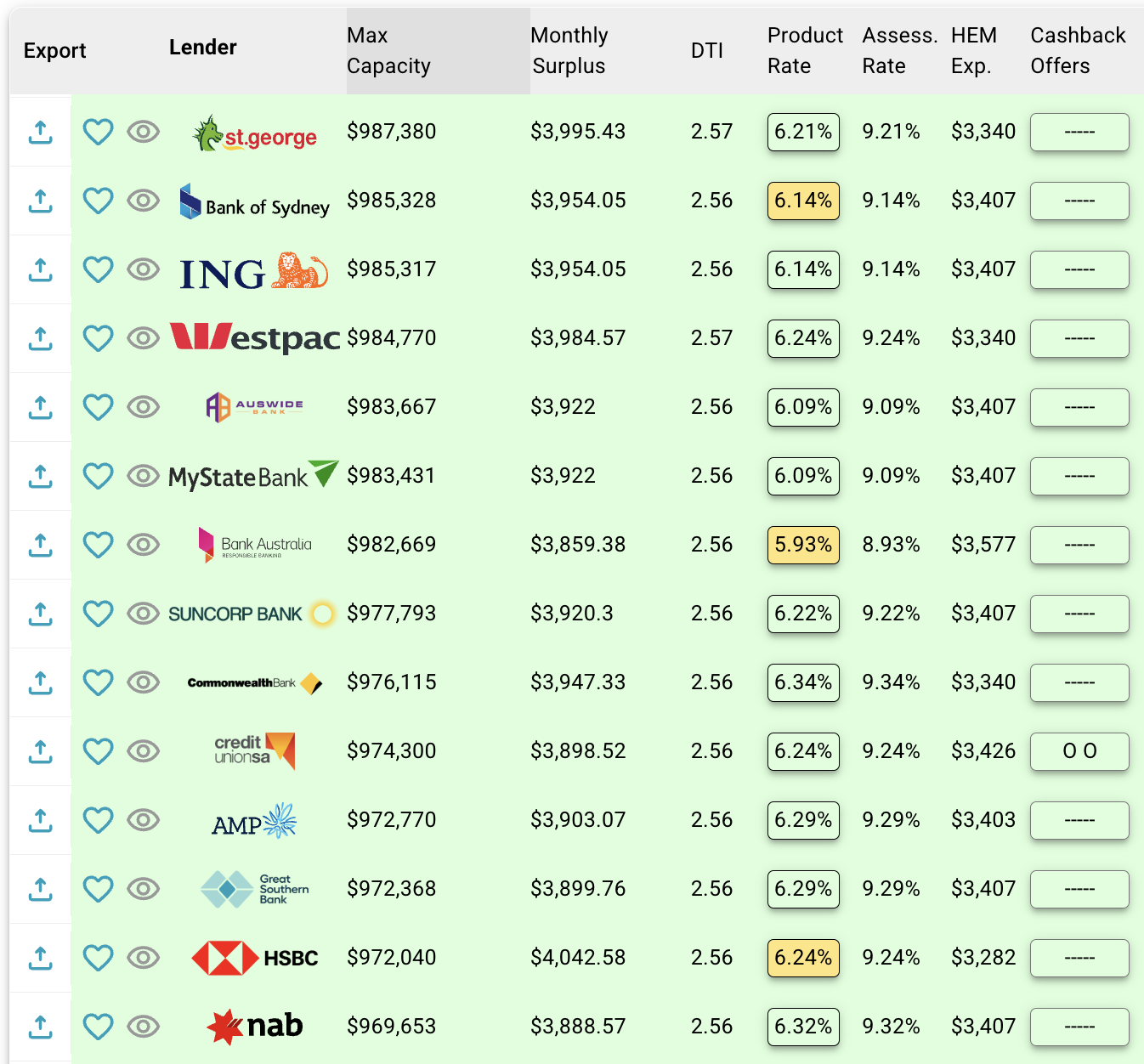
Australian credit history doesn’t cross the Tasman. Even Kiwis with a perfect 30-year credit record in New Zealand arrive in Australia with a credit file the bureaus describe as “thin” or “new to credit”.
Several major Australian lenders — including ANZ, Westpac, St.George and ING — rely heavily on automated credit scoring at the application stage. A thin file with limited Australian credit activity can result in a low score and cause a few wrinkles despite the strength of the rest of the application. The lender doesn’t see your spotless NZ history. The score sees a stranger. Brokers can help navigate this so that it is fine.
How to Get the Best Home Loan: What Australian Lenders Look For
Genuine Savings: A Policy That Trips Up Kiwi Buyers
Most Australian lenders require evidence of “genuine savings” when borrowing above 80% LVR —typically at least 5% of the purchase price held or accumulated over a minimum period (usually three months). The intent is to demonstrate financial discipline and the ability to set money aside. The mechanics matter for Kiwis because what counts and what doesn’t isn’t always intuitive.
Each lender is different, i.e. St George will accept six-month rental ledgers as genuine evidence of savings for the 5% Deposit scheme, with the logic that if you can pay your rent, you can pay your mortgage.
What generally counts as genuine savings
- Funds accumulated in any savings or transaction account over a 3+ month period (Australian or NZ) — provided the lender can see the build-up.
- KiwiSaver balances accessed via a first home withdrawal. hese are accepted as genuine savings by most lenders, because they have been accumulated through regular contributions over many years.
- Term deposits and shares held in your name for the required period.
- Equity in an existing property (some lenders, depending on the structure).
- Rental ledgers.
What generally does not count
- Gifted funds (from family in NZ or Australia), even when fully deposited into your account. They’re acceptable as a deposit, but they don’t count toward the genuine savings requirement at most lenders.
- Lump sums received recently — bonuses, tax refunds, asset sales — that haven’t been parked in an account for the required period.
- First Home Owner Grants and similar government contributions.

For Kiwibuyers, the most common genuine savings issue is family financial assistance —parents in NZ helping with a deposit. The funds are welcomed by lenders, but they don’t satisfy the genuine savings test on their own. Pairing gifted funds with KiwiSaver-sourced funds and a smaller pool of savings the buyer has accumulated themselves is usually the cleanest path.
But each scenario is different. Good brokers run every scenario past lenders to get their sign-off, providing peace of mind and deal certainty before submission.
Using KiwiSaver to Buy a Home in Australia
Trans-Tasman transfer plus First Home Super Saver (FHSS) release
Once you become an Australian tax resident, you can transfer your KiwiSaver balance into an Australian complying super fund under the Trans-Tasman Retirement Savings Portability Scheme. Once inside an Australian super, your KiwiSaver-sourced amount is treated as a personal voluntary (after-tax) contribution for FHSS purposes.
Under the FHSS scheme, you can then apply to release up to $15,000 per person from those KiwiSaver-sourced funds. For couples, that's up to $30,000 of deposit released from combined KiwiSaver balances.
How to Use Your KiwiSaver to Buy a Home in Australia: A Guide for New Zealanders
A few practical points to know:
- The $15,000 figure is a real cap on KiwiSaver-sourced FHSS releases, not a per-year allowance you can stretch across multiple years. The transfer is treated as a single contribution in the year it lands, and only $15,000 of it is FHSS-eligible. Any KiwiSaver balance above that sits in your Australian super fund but is locked under preservation rules until you reach preservation age.
- To access more than $15,000 each under the FHSS scheme (up to the $50,000 lifetime cap), you need to make additional voluntary contributions to your Australian super in later years. Those overpayments become FHSS-eligible up to $15,000 per year. KiwiSaver alone doesn't get you to $50,000.
- The transfer must go into a super fund that accepts KiwiSaver transfers. Only a handful do (First Super, Brighter Super, Australian Ethical and a small number of others). Most major Australian super funds don't.
- You must request the FHSS determination before property settlement. Apply too late and the option is gone.
- Australian-sourced amounts (any that previously crossed from AU super into KiwiSaver) are not FHSS-eligible. Most Kiwi balances won't be affected.
What this means for the first home withdrawal scheme
The KiwiSaver first home withdrawal scheme (the one that lets you access most of your balance for a first home deposit in NZ) is restricted to New Zealand property only. There is no version of that scheme that applies to an Australian purchase. If you read older content suggesting otherwise, it is incorrect.
How Australian lenders treat the released funds
Once funds are released under FHSS, Australian lenders generally accept them as part of your deposit and treat them as genuine savings, because the underlying balance has been accumulated through regular contributions over time. Lenders typically want documentation showing the source and release of the funds, alongside standard genuine savings evidence for the rest of your deposit.

Using New Zealand Income for an Australian Mortgage
If you’re still earning in New Zealand at the time of application — whether because you haven’t moved yet or because you maintain NZ employment after relocating — the Australian lender’s treatment of that income is the single biggest variable in your application.
How NZ income is assessed
Several mainstream Australian lenders (typically a small subset of the majors plus several specialist lenders) accept New Zealand PAYG income for serviceability purposes, particularly from established employers in stable industries. Where accepted, the income is processed in two layers:
- Currency conversion at the lender’s assessment rate, commonly 70–80% of the prevailing spot rate, providing a buffer against currency movement.
- Income shading on top of the conversion. Some lenders apply an additional discount (often counting only 80% of the converted figure)for serviceability calculations, on the basis that foreign income is inherently riskier.
These two layers compound. A NZ$120,000 salary at a spot rate of NZ$1.00 = AU$0.92 nominally converts to AU$110,400. Apply a 75% conversion buffer, and it’s assessed at AU$82,800. Apply a further 80% income shading and it lands at AU$66,200 — about 60% of the original figure. That dramatically affects borrowing capacity and is why two lenders looking at the same applicant can produce wildly different maximum loan amounts.
Home Loan Pre-Approval in Australia: How It Works and How to Get Approved
Documentation requirements
Expect to provide three to six months of NZ payslips, your most recent NZ tax assessment(IR3 or equivalent), an employer letter on company letterhead confirming role, tenure and base salary, and three months of NZ bank statements showing salary credits. For self-employed applicants, two years of NZ business financials are typically required, often with a New Zealand chartered accountant’s sign-off.
Bonus, overtime and rental income
Bonus income, overtime, commissions and rental income from NZ properties are all treated more conservatively than base salary, often discounted to 50–80% of the actual amount. NZ rental income is sometimes accepted toward serviceability, but with the underlying NZ mortgage debt also assessed against you, often at a higher servicing rate than NZ banks would apply.
How Existing NZ Debts Are Assessed
Your existing New Zealand financial commitments don’t disappear when an Australian lender looks at your application — and the way they’re assessed often surprises Kiwibuyers.
- NZ mortgages are typically assessed at the Australian lender’s standard servicing rate (usually 6–7%+ in 2026), not the actual NZ interest rate you’re paying. If you have a NZ$400,000 mortgage at an actual rate of 5.5%, the Australian lender may assess your repayment capacity as if you were paying it at 7% — materially reducing your Australian borrowing capacity.
- NZ credit cards are assessed at the credit limit, not the balance — same convention as Australian cards. A $20,000 limit you’ve never used still reduces your Australian borrowing capacity by tens of thousands.
- Student loans (the NZ equivalent of HECS) are treated inconsistently. Some lenders include the repayment obligation; others exclude it entirely. The lender choice matters here.
- NZ investment property held by the applicant is assessed for both its rental income and its mortgage debt. The income side is shaded as described above; the debt side is loaded at the lender’s assessment rate. The net effect is often negative for serviceability — owning a NZ investment property can reduce your Australian borrowing capacity rather than increase it, which is counterintuitive but important to plan around.

Currency Transfer: The Quietly Expensive Part
Most Kiwibuyers underestimate how much the bank earns on a single international currency transfer. On a deposit of $300,000, the gap between using your retail bank and using a specialist currency transfer service is commonly $5,000–$10,000 — money that comes directly out of what would otherwise be your equity in the new property.
The mechanics are straightforward. Banks make money on currency transfers by quoting an exchange rate that includes a margin on top of the wholesale (interbank) rates. That margin can be 2.5–4% on retail bank transfers, often without an explicit fee being shown. Specialist services like TorFX, Wise, and OFX operate with margins of 0.5–1.5%, and the savings compound as transfer size increases.
Save on Currency Transfers: TorFX vs Banks, Wise & OFX for Property
A worked example: transferring NZ$330,000 to Australia at a spot rate of NZ$1.00 = AU$0.92. At a retail bank with a 3% margin, you’d receive approximately AU$294,500. At a specialist with a 0.7% margin, you’d receive approximately AU$301,300. Same source funds, same destination, $6,800 difference — sitting in your offset account or applied to your loan rather than the bank’s FX desk.
Two further considerations:
- Forward contracts let you lock in an exchange rate today for a transfer happening up to 12 months from now. If you’ve sold a NZ property and don’t need the AUD until settlement of your Australian property, forward contracts protect you from rate movement. Worth using when the timing gap is meaningful.
- Settlement timing matters. Australian property settlement happens on a specific date, and the funds need to be cleared in the buyer’s solicitor or conveyancer’s account before that date. Building a 5–10-day buffer for international transfers — and a backup plan if the transfer is delayed — is standard practice.
- If you’re holding ongoing NZ savings, parking the AUD-converted balance in your Australian offset account once you have a loan running can reduce interest costs meaningfully. The decision of when to convert(before settlement, gradually, or held in NZD) involves both currency view and tax considerations and is worth a conversation with your accountant.
- I've also seen smart clients use digital wallets at companies like wise to hold their international currency and draw it at the right time to get better rates.

LMI and the First Home Guarantee
Lenders Mortgage Insurance applies to Kiwis the same way it applies to Australian citizens: it’s charged when borrowing above 80% of the property value, and the premium scales with both loan size and LVR. There’s no specific LMI surcharge for SCV-holding Kiwis, and there’s no specific LMI exemption either.
Where Kiwibuyers can save on LMI is via:
- Profession-based waivers. Several Australian lenders offer specialist home loans for doctors with LMI waived at up to 95% LVR. Similar benefits may also be available through selected home loans for accountants and home loans for lawyers, depending on the lender’s eligibility criteria, income requirements and maximum loan limits. These professional waivers are generally based on your occupation rather than citizenship, so being a New Zealand citizen does not automatically exclude you.
- The First Home Guarantee. Eligible first home buyers(including SCV-holding Kiwis) can borrow up to 95% LVR with no LMI under the federal scheme.
- Family guarantee structures. Where parents (in NZ or Australia) can offer security against their own property to bridge the deposit shortfall, LMI can be avoided entirely on a higher-LVR purchase.
First Home Guarantee — what changed in October 2025
The First Home Guarantee scheme was significantly reformed from 1 October 2025, and the changes are particularly favourable for Kiwi buyers. The current rules are:
- No annual cap on places. The previous limit on the number of places per financial year has been removed — the scheme is now uncapped.
- No income tests. The income caps that previously restricted access have been removed. Eligibility no longer turns on what you earn.
- Property price caps still apply, varying by location.
- Eligibility now extends to applicants who have not owned residential property in Australia in the previous 10 years — not just those who have never owned. This is a meaningful change for Kiwis who may have previously owned property in New Zealand or Australia: prior NZ ownership doesn’t disqualify you, and prior Australian ownership more than 10 years ago no longer does either.
- Applications must go through a Participating Lender —not all Australian lenders are on the scheme’s panel, so confirming your preferred lender’s status before applying is important.
For an eligible Kiwi family, the FHG is often the most valuable single concession in the entire purchase, saving anywhere from $15,000 to $40,000+ in LMI on a typical first home.
First Home Gaurentee scheme - what changed?
Tax Implications: Both Sides of the Tasman
Trans-Tasman tax interaction is a specialist area, and this section is general information only. It is not a substitute for advice from a qualified accountant familiar with both the Australian and New Zealand tax systems. Every situation is different, so it’s important to seek personalised tax advice before purchasing property.
Australian tax residency
If you are living and working in Australia on an SCV, you will generally be considered an Australian tax resident. This means Australian-sourced income is taxed in Australia, and you may also have obligations to disclose worldwide income.
Capital gains tax (CGT) may apply when selling investment properties. In many cases, individuals who hold a property for more than 12 months may receive a 50% CGT discount. Your principal place of residence may also qualify for a CGT exemption, depending on your circumstances.
Medicare Levy
Most Kiwi SCV holders are eligible for Medicare and generally pay the 2% Medicare Levy on taxable income in Australia. Higher-income earners without eligible private hospital cover may also pay the Medicare Levy Surcharge, which is worth factoring into overall income and borrowing calculations.
NZ tax residency
Please chat to a specialised tax accoutant on this to avoid any nasty surprises.
Stamp duty
Stamp duty(sometimes called transfer duty) varies by state. NSW, Victoria, Queensland and other states have their own scales, plus first-home buyer concessions and foreign-purchaser surcharges. SCV-holding Kiwis are generally treated as Australian residents for stamp duty purposes and avoid foreign-purchaser surcharges, but specific state rules vary. Confirming with the relevant state revenue office or a property lawyer before exchange is the safe approach.
Crunch Stamp duty calculations here

Land tax
Land tax is an annual state-level tax on the value of investment property holdings (and in some states, owner-occupied holdings above certain thresholds). Rates and thresholds vary by state and are easy to overlook in the upfront purchase calculation. For Kiwis buying Australian investment property, factor land tax into your annual holding costs alongside rates, insurance and maintenance — it can run into thousands of dollars per year per property.
Special Situations Worth Knowing About
Buying with an Australian partner
A common scenario: one Kiwi applicant, one Australian citizen partner. This is actually a favourable structure at most lenders, because the Australian partner’s established credit history and unambiguous residency status anchors the application. Income from both partners is typically assessed at full value (less the standard NZ income shading on the Kiwi partner’s NZ-sourced income, if any). LVRs are usually assessed on the same basis as a fully Australian application. If you’re in this position, you have more lender choice than a sole Kiwi applicant meaningfully.
Investment property as a non-resident Kiwi
For Kiwis still living in New Zealand who want to buy Australian property as an investment, the policy landscape is materially different from owner-occupier purchases:
- LVR caps are typically lower — 60–70% at many lenders for non-resident investors, with some specialist lenders going higher for the right structure.
- Fewer lenders will write the loan at all. The panel is narrower than for resident applicants.
- Australian rental income from the new property is typically only counted toward serviceability once the property is tenanted (or sometimes via a market rent appraisal); pre-purchase, you’re assessed largely on NZ income alone.
- FIRB exemption still applies for SCV-holding Kiwis, but stamp duty foreign-purchaser surcharges are a sharper concern for non-resident purchases — confirming the position that state by state matters more here. Seek professional accounting and legal advice to not get caught out.
Buying a house-and-land package or building
Construction lending is its own subspecialism. Progress payment structures require the lender to approve both the builder and the contract; LVR during construction is typically assessed on the lower of (land value + contract price) or the on-completion valuation; and non-resident Kiwi applicants face tighter LVR caps on construction than on established property. If you’re considering a build rather than an established purchase, specialist advice is particularly valuable.
A Worked Example: A Kiwi Family Buying in Sydney
Consider Tom and Anna, a Kiwi couple in their early thirties. Tom is a registered nurse who took up a permanent role in Sydney 18 months ago. Anna works remotely for a Wellington-based tech company on an NZ contract, earning NZ$110,000, and joined Tom in Sydney 4 months ago. They have NZ$80,000 in combined KiwiSaver balances (NZ$50,000 in Tom's, NZ$30,000 in Anna's) and AU$120,000 in Australian savings. They want to buy their first home in Sydney for AU$950,000.
Their situation has several moving parts:
- Tom's income is straightforwardly Australian: AU$98,000 base plus Sydney shift allowances, all PAYG, all assessable at 100%. He's built an Australian credit footprint over 18 months.
- Anna's NZ income is acceptable at some Australian lenders but not all. The lenders that do accept it apply a currency conversion buffer plus income shading, reducing the AU$ assessable figure to roughly 60% of the headline NZ$110,000.
- The First Home Guarantee comes with a major catch the scheme itself doesn't mention: Participating Lenders generally do not accept foreign income for FHG serviceability. So if Tom and Anna go down the FHG path, the loan has to be serviced on Tom's Australian income alone, with Anna's NZ income excluded entirely.
- On Tom's income alone, their realistic borrowing capacity is well below the AU$950k purchase. The FHG path likely isn't viable for the property they want.
- For KiwiSaver, both Tom and Anna can transfer their balances into an Australian super fund that accepts KiwiSaver transfers, then apply for an FHSS release of up to AU$15,000 each. That's AU$30,000 of additional deposit available from KiwiSaver. Anything they transfer above that sits in Australian super and stays locked until preservation age.
- Tom is a registered nurse, which makes them potentially eligible for an LMI waiver at lenders that include nurses in their medical professional policies. This is a critical alternative path because it works at lenders that accept Anna's NZ income.
.jpg)
So they have a real choice to make:
Path A: First Home Guarantee. No LMI, but Anna's income is excluded, so they qualify on Tom's income alone. That likely means buying a less expensive property (perhaps in the AU$650-700k range) rather than the AU$950k home they have their eye on.
Path B: Lender that accepts NZ income, with Tom's nursing professional LMI waiver. Anna's NZ income is assessable (after the conversion and shading discount), which lifts their borrowing capacity enough to support the AU$950k purchase. Tom's professional waiver removes the LMI hit they'd otherwise face at 90% LVR. They lose the FHG benefit, but gain the serviceability they need to actually buy the property.
Working through the maths on Path B: combined deposit of AU$120,000 (existing savings) plus AU$30,000 (KiwiSaver via FHSS) gives AU$150,000. At 90% LVR on an AU$950,000 purchase, they need an AU$95,000 deposit minimum, plus stamp duty (NSW first home concessions apply, with the exact amount depending on current thresholds) and other costs. They're well covered on deposit. The win is in the lender choice that lets them combine Anna's income with Tom's nursing waiver.
For most Kiwi families with mixed AU and NZ income, Path B is the more powerful play, but it only opens up at a small number of lenders. Going to a bank that doesn't accept NZ income, or doesn't recognise nurses in its professional waiver list, would close both doors at once.
Same family, same income, same KiwiSaver. The lender choice and the trade-off between FHG and NZ income serviceability decide the outcome.
Documents You’ll Likely Need
- Australian and New Zealand passports (or one passport plus citizenship documentation).
- Evidence of SCV status (typically established via VEVO check).
- Australian tax returns and notices of assessment for the past two years (where applicable).
- New Zealand tax assessments (IR3 or equivalent) for the past two years (where NZ income is being relied on).
- Three to six months of payslips (Australian and/or NZ, depending on income source).
- Three months of bank statements for all transactions and savings accounts (NZ and Australian).
- Employment confirmation letters from current employers.
- KiwiSaver provider letter confirming the approved first home withdrawal amount, where applicable.
- Evidence of genuine savings — typically three months of statements showing the deposit accumulating.
- Identity verification through a recognised process(Australia Post, VOI agent, or bank branch).
Common Mistakes Kiwi Buyers Make
- Assuming all Australian lenders are the same. They’re not, especially for cross-border applicants. One bank’s answer is one bank’s answer, not the market’s answer.
- Underestimating the impact of a thin Australian credit file. A perfect NZ credit history doesn’t cross the Tasman. Building an Australian credit footprint before applying — or choosing a lender that manually assesses rather than scores — can be the difference between approval and decline.
- Confusing genuine savings with deposit funds. Family gifts and recent lump sums work as a deposit but generally don’t satisfy genuine savings requirements. KiwiSaver-sourced funds usually do.
- Transferring KiwiSaver to an Australian super before withdrawing for a first home. Once transferred, the funds are locked into Australian preservation rules and generally can’t be accessed for property until preservation age.
- Assuming KiwiSaver first home withdrawal can be used for an Australian purchase. It cannot. The first home withdrawal is restricted to NZ property only. The pathway that works for an Australian purchase is to transfer KiwiSaver to an Australian super fund that accepts KiwiSaver transfers, then release up to $15,000 per person via the First Home Super Saver (FHSS) scheme. $15,000 is the practical cap on what comes out of KiwiSaver via FHSS, not a per-year allowance.
- Underestimating currency transfer costs. Using a retail bank for a six-figure deposit transfer regularly costs $5,000–$10,000 more than a specialist provider.
- Ignoring the compounding effect of NZ income shading. Currency conversion buffer + income shading can take a NZ salary down to 60% of the headline value for serviceability. That changes borrowing capacity dramatically.
- Forgetting that NZ debts are assessed at the Australian lender’s servicing rate, not the actual NZ rate. Existing NZ mortgages can quietly cap Australian borrowing capacity.
- Missing the October 2025 First Home Guarantee changes.If you read older content telling you about income caps or limited places, it’s out of date. Both have been removed.
- Not confirming SCV status before exchange. Most Kiwis assume their SCV is current, but lapses, cancellations and edge cases happen. A free VEVO check confirms it instantly.
- Choosing the lender first and the structure second. The right answer often involves choosing a structure (joint with an Australian partner, family guarantee, FHG pathway, professional waiver) that opens different lender options.
Practical Process Notes
Confirming SCV status (free, instant)
VEVO is the Department of Home Affairs’ free Visa Entitlement Verification Online service. A check returns instant confirmation of the current SCV status and is the cheapest piece of due diligence in the entire purchase. Run one before signing any contract.
Conveyancing — must be Australian
Australian property conveyancing must be handled by an Australian-licensed conveyancer or solicitor in the relevant state. A New Zealand lawyer cannot act on an Australian property purchase, even if you’ve worked with them for years on NZ matters. Engaging an Australian conveyancer or solicitor experienced with cross-border buyers is worth the small additional fee.
Lawyers vs. Conveyancers: Who’s best positioned to have your back in Property Deals?
Building and pest inspections
Standard Australian practice and especially important for Kiwi buyers purchasing remotely from New Zealand who can’t physically inspect the property. Combined building-and-pest inspections typically cost AU$500–$800 and are done before exchange (or made a condition of the contract). Skipping them on a remote purchase is a false economy.

Frequently Asked Questions
Do New Zealand citizens need FIRB approval to buy property in Australia?
Generally no. New Zealand citizens holding a valid Special Category Visa (SCV, subclass 444)are treated as Australian residents under the Foreign Acquisitions and Takeovers Act and are exempt from FIRB approval requirements for residential property purchases. Confirming current SCV status via a free VEVO check is recommended before signing any contract.
Can I use my KiwiSaver to buy a house in Australia?
A: Yes, but not via the KiwiSaver first home withdrawal scheme (which is restricted to NZ purchases only). The pathway that works is to transfer your KiwiSaver to an Australian super fund that accepts KiwiSaver transfers, then apply to release up to $15,000 per person from those funds under the First Home Super Saver (FHSS) scheme. That $15,000 is the practical cap on what you can get out of KiwiSaver via FHSS. Anything above $15,000 stays in your Australian super and is locked until preservation age. To access more under FHSS, you'd need to make additional voluntary contributions to your Australian super in later years. Only a handful of Australian super funds accept KiwiSaver transfers (First Super, Brighter Super and a few others), so fund choice matters.
How much can I borrow as a Kiwi in Australia?
For Kiwis already living and working in Australia under an SCV, borrowing capacity is assessed the same way as for an Australian citizen — based on income, expenses, existing debts and loan size. Maximum LVRs of up to 95% are available with the right lender. For Kiwis still living in New Zealand, maximum LVRs typically drop to 70–80% and lender policies vary widely.
Do Kiwis qualify for the First Home Guarantee?
Yes. SCV-holding Kiwis are eligible for the federal First Home Guarantee on the same basis as Australian citizens. Since 1 October 2025, the scheme has no annual cap on places and no income test, and eligibility extends to applicants who have not owned property in Australia in the last 10 years (rather than the previous “never owned” rule). Property price caps still apply by location, and applications must go through a Participating Lender.
Why might my Australian home loan application be declined despite a clean NZ credit history?
Australian credit history is separate from New Zealand credit history. A Kiwi with a perfect 30-year NZ credit record can still have a thin Australian credit file, which can produce a low automated credit score at lenders that rely on scoring. Building an Australian credit footprint before applying — or choosing a lender that manually assesses applications — typically resolves this.
Can I get an Australian home loan while still living in New Zealand?
Yes, several Australian lenders write loans for non-resident or partially-resident Kiwi applicants. Maximum LVRs are generally lower (70–80%), documentation requirements are heavier, and not every lender accepts NZ income for serviceability. The lender panel here is narrower than for resident applicants, but real options exist.
Do Kiwis pay foreign buyer stamp duty surcharges?
Generally no. SCV-holding New Zealand citizens are usually treated as Australian residents for state stamp duty purposes and are not subject to foreign-purchaser surcharges. Each state defines foreign persons slightly differently, so confirmation with the relevant state revenue office or a property lawyer before exchange is recommended.
How is my New Zealand income assessed by Australian lenders?
Where accepted,NZ income is converted to Australian dollars at the lender’s assessment rate (often 70–80% of the spot rate to provide a buffer against currency movement). Many lenders then apply additional income shading (often counting only 80% ofthe converted figure) for serviceability. The compounding effect can take a headline NZ salary down to around 60% for borrowing capacity calculations.
How are my existing NZ debts assessed by Australian lenders?
Australian lenders typically assess your NZ mortgage commitments at their own assessment rate (often 6–7%+) rather than the actual NZ interest rate you’re paying, which can materially reduce your assessed borrowing capacity. NZ credit cards are assessed at the credit limit, not the balance. Treatment of NZ student loans varies by lender.
Should I transfer my KiwiSaver to Australian super?
The Trans-Tasman Retirement Savings Portability Scheme allows the transfer, but once funds are in an Australian super, they’re subject to Australian preservation rules and generally can’t be accessed for a first home purchase. If there’s any chance you’ll want to use your KiwiSaver balance toward an Australian first home, complete the first home withdrawal before transferring the residual.
What’s the cheapest way to transfer my deposit from NZ to Australia?
Specialist currency transfer services (TorFX, Wise, OFX and similar) typically offer significantly better exchange rates than retail banks, with margins of 0.5–1.5% versus 2.5–4% at most banks. On a six-figure transfer the difference is regularly several thousand dollars. Forward contracts can lock in an exchange rate up to 12 months in advance, useful if your timing is uncertain.

Where to Go From Here
Buying property in Australia as a New Zealander is one of the more favourable cross-border purchase situations in the world — provided you navigate the lender, deposit, credit and tax interactions correctly. Most of the worst outcomes come not from the policies themselves but from working with one bank that doesn’t specialise in Kiwi applicants, missing out on the post-October 2025 First Home Guarantee changes, or making decisions in the wrong sequence (transferring KiwiSaver before withdrawing, choosing a lender before structuring the application, applying before building an Australian credit footprint).
Mortgages Plus works with Kiwi families buying in Australia regularly and tracks lender policy changes affecting cross-border applicants. If you’d like a clearer picture of what’s realistically available for your specific situation — visa status, income mix, deposit composition, credit footprint and timeline — we’re happy to walk through it. There’s no fee for the conversation; brokers are paid by the lender at settlement.
Read Mortgages for New Zealanders in Australia.
If you'd like a free 20-minute call to map out your pathway, including which lenders will accept your situation and the order to do things in reach out via my website or email chris@mortgages-plus.com.au. There's no fee. No strings attached.